
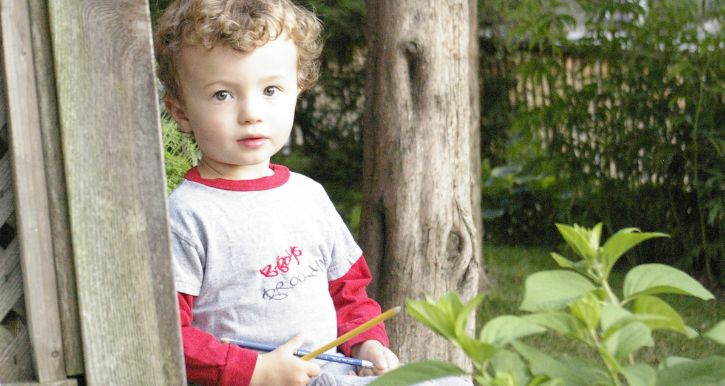
When our son, Ewan (pictured above), sat down for an early childhood music class at age two, no one would have guessed his pencil drumsticks would morph into nailing Neil Peart’s drum parts for Rush’s “Tom Sawyer”, a song that trips up plenty of adult drummers. But that’s exactly what happened over ten years. Looking back, we credit his musical foundation to three years of consistent Little Beats classes, every fall, winter, and spring.
Why Early Childhood Music Classes Don’t Always Start Smoothly
We developed Little Beats, our early childhood music class, initially for our own kids. It didn’t start smoothly. For the first few months, Ewan didn’t want to go. There were tears, and his dad had to sit with him in every class. Sometimes he’d wander to the window instead of joining in, looking like he wasn’t paying attention at all. Moments like that make parents want to quit after one session of early childhood music classes — and it’s exactly the moment our program is built to work through. Young children absorb musical concepts long before they can outwardly demonstrate them, and staring out a window doesn’t mean a child isn’t learning. This is when their neural pathways silently develop, helping them engage more fully with every passing lesson.
The Role of Repetition in Early Childhood Music Education
Repetition is a key concept in our early childhood music classes, and it can seem quite redundant to an adult. Didn’t we already sing that song, keep that beat, clap that rhythm? But children need to experience musical concepts repeatedly as their brains develop. Every repeated song, steady beat, and rhythm exercise reinforces the same neural connections, turning musical concepts from something a child has to consciously work out into something that feels automatic. We’re not repeating activities because we’ve run out of ideas — we’re deliberately building the fundamentals of rhythm, pitch, and timing so that when a child moves on to formal lessons, they’re not starting from zero. They’re building on something already familiar, which is the whole promise of a strong early childhood music foundation.
How Early Childhood Music Built Ewan’s Skills
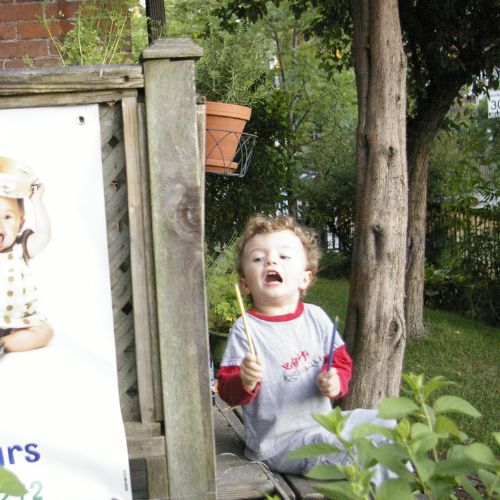
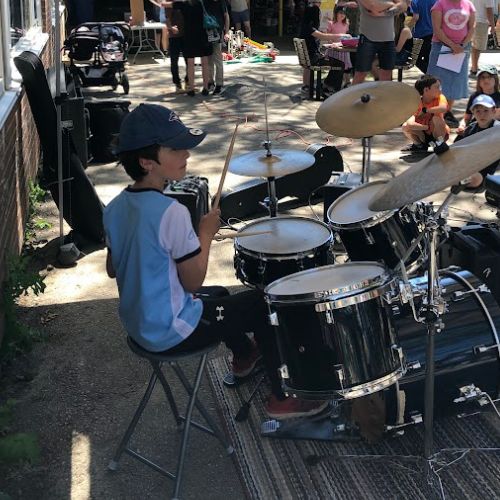
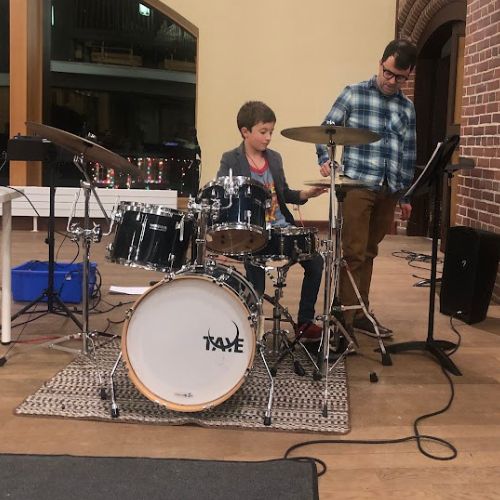
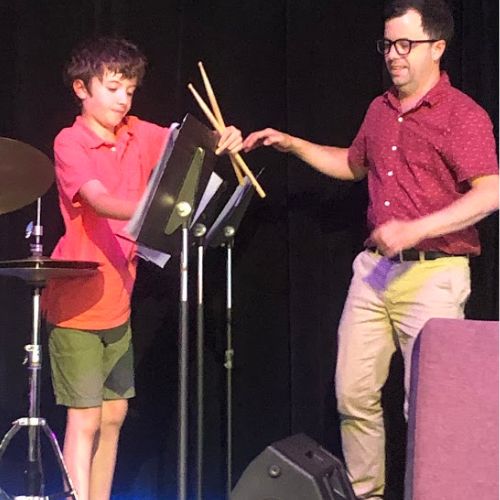
For Ewan, that meant his transition into real instruments was fast and confident. He started drumming lessons at five and performed his first recital — “Seven Nation Army” — at six. At seven, he added piano, studying with longtime OTOB teacher William Lewans, and moved through the beginner books quickly enough to reach Grade 1 RCM within a year. The rhythmic training, note naming, and pitch work from his early childhood music classes made those next steps come naturally. Little Beats gave him a musical vocabulary before he ever knew the words.
Building Confidence Beyond the Music
The program’s impact went beyond technical skill, too. Regular class structure and, later, our monthly student performances and recitals built Ewan’s comfort performing in front of others. At first, this required real encouragement. Like most kids, he got nervous. Add a few years in our rock band program, and he learned to listen and create alongside other young musicians. We now get the full picture of how a two-year-old who cried at the door of his first early childhood music class grew into a twelve-year-old drummer capable of performing his idol’s most demanding work, note for note. Now he doesn’t think twice about performing! He just gets out there and does his thing!
The Takeaway for Parents Considering Early Childhood Music
Ewan’s story proves what early, consistent early childhood music education can do. It’s not about spotting talent early — it’s about giving a child’s brain the repeated, developmentally paced exposure it needs to build a real foundation. If your little one is the one staring out the window during class right now, know this: that’s not a sign to quit. It’s often exactly where it starts.
