
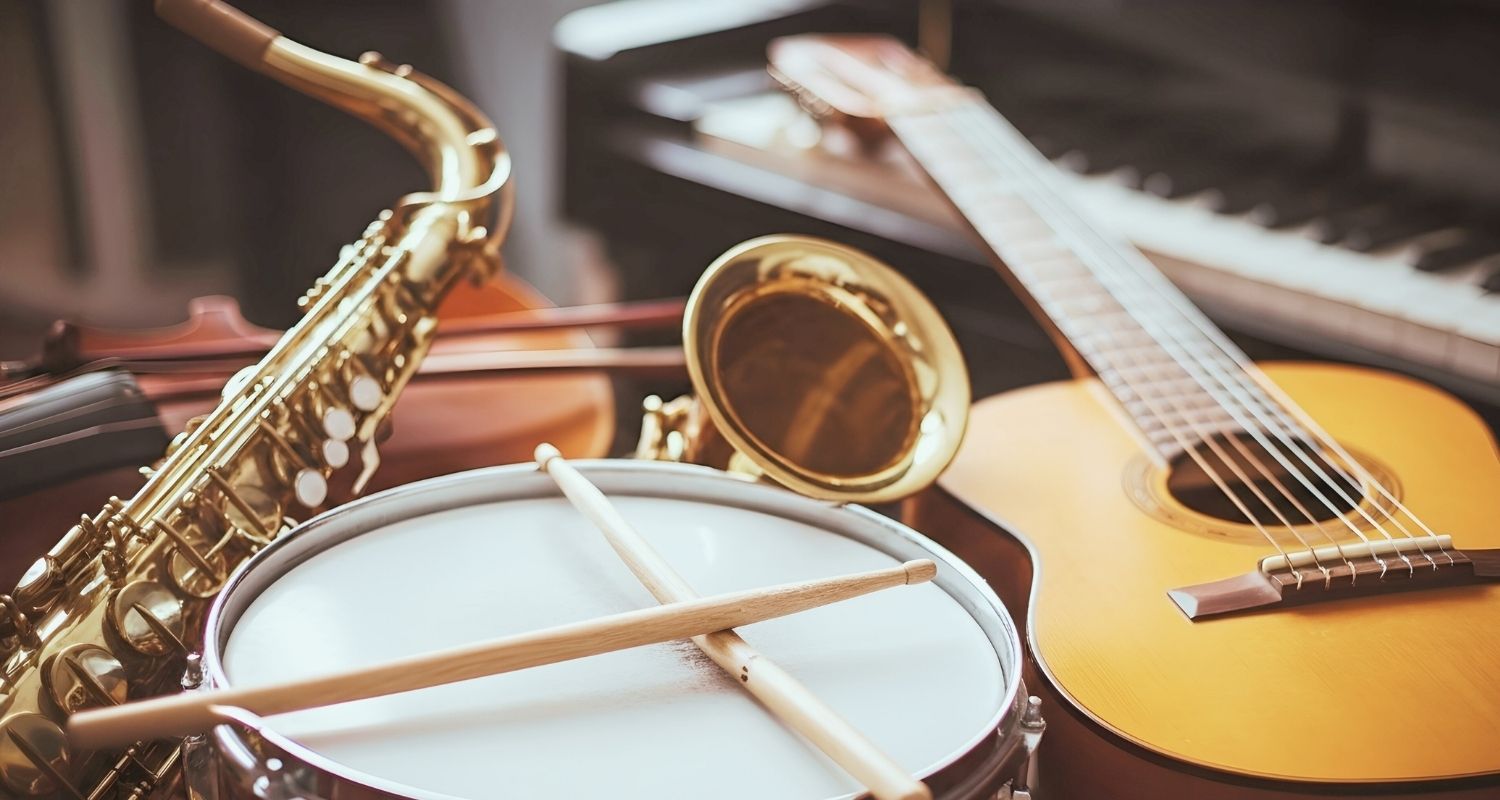
A plethora of scientific studies prove that learning to play a musical instrument, at any age, offers extraordinary benefits for the brain. Parents of babies and toddlers discover these advantages firsthand after enrolling their children in early childhood music education. As children enter preschool age, they are ready to learn music theory, note reading, and pitch, which they can accomplish with any musical instrument. Parents often ask us which starter musical instruments are best for kids. This guide will help you make an informed decision. In this blog, we cover the following:
- How To Match Your Child With The Perfect Starter Musical Instrument.
- Purchasing Trial Lessons.
- Managing The Cost Of Music Lessons.
- Practicing At Home.
Matching Your Child With A Starter Musical Instrument
If you have a child who wants to play the guitar on Monday but pleads for a drum set by Friday, enrolling them for music lessons can become confusing! Surprisingly, this isn’t an uncommon situation. We encourage parents to consider several factors before settling on the perfect starter instrument for their child. Understanding your child’s interests and factoring in their age and learning style will greatly help you narrow down the options.
Interest:
While the piano may seem like the most popular starter musical instrument, you also need to consider your child’s passion and the instruments that pique their interest. Not everyone loves the piano. We often hear this query from parents: “My son really loves the drums, but we’d like to start him with piano. If he gets good at it, we can switch to drums.” If your son really loves the drums, then that would be a good starter musical instrument for him. Remember, you can always rent musical instruments for a couple of months to see how it goes! Forcing him to learn piano may result in his losing interest and not practicing regularly. He may even quit within a few months. Our advice to parents is to choose a starter musical instrument that your child is drawn to and interested in learning.
Age & Physical Abilities:
Children have the maturity to attend private music lessons at the age of 5. They have developed the dexterity to handle instruments such as the ukulele, violin, and piano keyboard. Guitar and drums would work for children ages 7 and up.
Learning Style:
Visual learners take to the piano quickly because they can see the notes laid out in a logical sequence right in front of them. Auditory learners thrive with string or wind instruments, where listening and pitch adjustment are key. The physical, hands-on aspect of percussion instruments appeals to kinesthetic learners, those who learn by doing,
Furthermore, method books make musical learning fun, engaging and rewarding. Method books for guitar and ukulele teach younger kids the basics, with popular songs and folk music. They can also learn basic drumming techniques with picture books and play-along tracks that keep them engaged.
The piano is such a popular starter instrument that students and teachers have a large selection of method books to choose from. They include pictures and step-by-step instructions to help students master the technical aspects of each new song. Corresponding theory books for sight-reading and ear-training to go along with each level to make learning even more fun. Our online music bookstore offers a wide variety of method books for students to purchase.
Learning the basics of music, note reading, pitch and more, works the same for all instruments and are transferable skills. Consequently, your child can learn to play a new instrument down the road, without duplicating efforts.
Purchasing Trial Lessons
Trial lesson packages are an economical way for your child to experience different musical instruments one-on-one with a teacher. They allow you to gauge your child’s enthusiasm and rapport with teachers, helping you narrow down the options.
Managing The Cost Of Music Lessons
Your budget should include the cost of lessons, the instrument, maintenance, and books. The cost of purchasing instruments like a piano can feel like sticker shock, but affordable options exist. Long and McQuade is a large international musical instrument retailer. They offer affordable instrument rental programs exclusively in Canada, with the option to apply rental payments toward the purchase of the instrument. You will also find competitively priced instruments at The Twelfth Fret, a local business for guitars, basses and ukuleles.
We purchased most of our school pianos from Remenyi House of Music, which offers a range of pianos for every budget. Our pianos are entry-level Steinways (Boston), starting at around $10,000 for an upright. However, you can buy used pianos or keyboards for $1,000 or less. Also, Merriam Music offers a range of affordable pianos and keyboards.
Practicing At Home
Learning music is more than just showing up for weekly lessons. Practicing the music lessons at home helps the skills take root, and your child will require both time and space to do so.
Most teachers recommend 15–30 minutes of daily practice for beginners. However, busy schedules, a child’s shifting motivation, distractions and more can make practice time feel like an overwhelming battle. Read our blog on this topic to help you structure practice sessions, so they’re enjoyable for the entire household.
Creating space for a musical instrument can be problematic, particularly for large instruments like a piano. Very few families have the budget or room for a grand piano. In our school’s history, only one student made this investment! Digital keyboards can be an economical solution if an upright piano is not an option, and they come with headphones so kids can practice without disturbing you or the neighbours!
Noise is another factor, particularly for an acoustic drum kit, which might require soundproofing or very understanding neighbours! Most of our students use reasonably priced electronic drum sets and keyboards. Fortunately, they connect headphones to electronic drum sets and keyboards, which offer peace of mind if you live very close to neighbours.
Finding the right instrument for your child doesn’t have to be a stressful decision. Trust your child’s instincts, keep the focus on fun, and remember that the goal of the starter musical instrument is simply to spark a love of music.